
How Are Projection Domes Transported and Set Up?
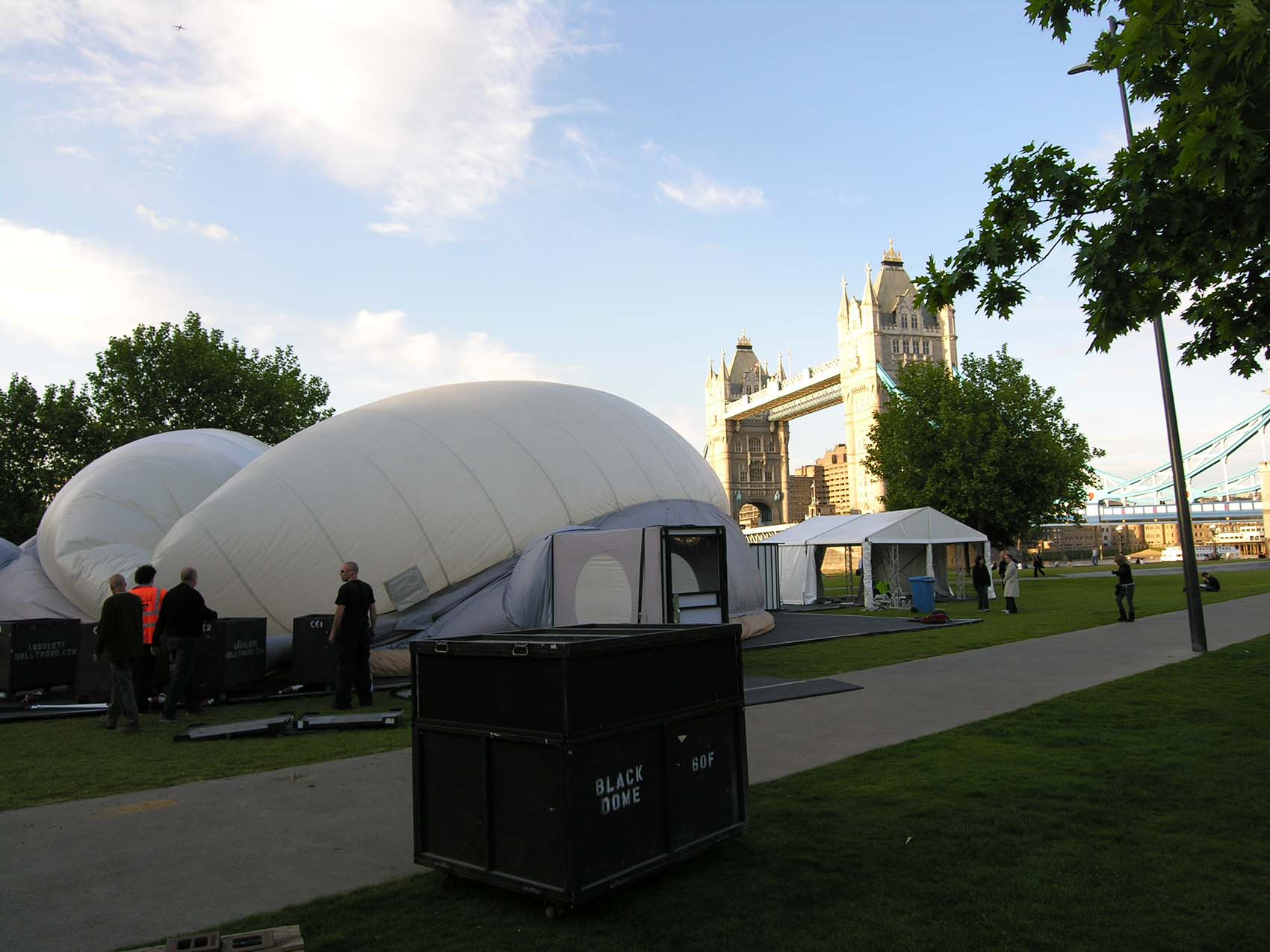
Inflatable projection domes are transported by land, sea, or air freight in standard cargo containers or flight cases, then inflated on-site from ground level without cranes or heavy equipment. A 60-foot (19-meter) dome completes structural installation in one day. A 235-foot (72-meter) dome installs in four days. No steel framework, no bolt-together assembly, no crane lift — the dome inflates from a flat pack to a fully pressurized projection-ready structure using an air handling system that the installation crew manages from ground level.
The Absolute Hollywood Galactic projection dome — the mid-range workhorse of the fleet at 65 to 160 feet — ships by air, sea, or road freight to any country without cranes or heavy equipment.
Absolute Hollywood invented portable inflatable video projection dome technology in 1999 and has deployed domes across 33 countries by land, sea, and air — from the Sands Expo and Convention Center in Las Vegas in 2000 to the Vancouver 2010 Winter Olympics, Super Bowl LIV in Miami, the New Suez Canal Grand Opening in Egypt, and a permanent installation at Universal Studios Florida that ran from 2006 to 2011. Every deployment on every continent has used the same core transport and installation architecture described below.
How Are Projection Domes Shipped?
An inflatable projection dome ships deflated and packed into cargo containers, flight cases, or custom shipping crates depending on the dome size, destination, and deployment timeline. Because the dome structure is fabric rather than steel, the packed volume and weight are dramatically lower than any rigid dome alternative of equivalent diameter.
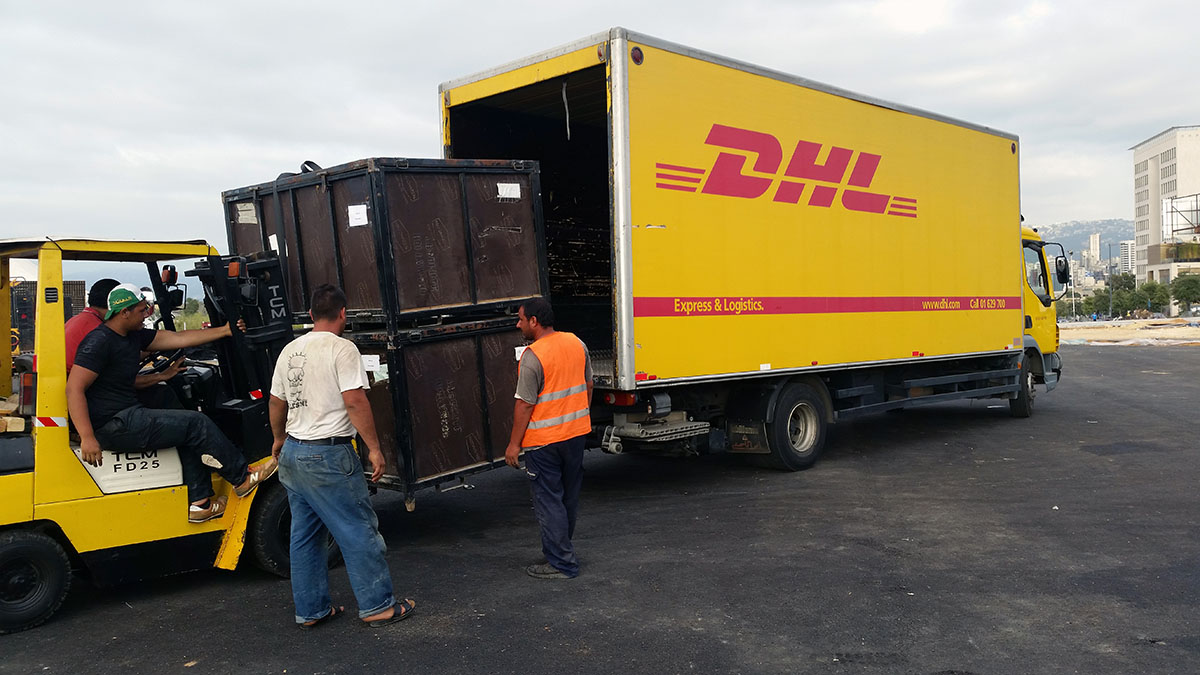
A 60-foot (19-meter) StratoSphere ships in a volume that fits on a standard flatbed or in an air freight pallet configuration. It can be on a commercial cargo flight and on-site anywhere in the world within 24 to 48 hours of dispatch when the event timeline demands it. The 235-foot (72-meter) Celestial Dome — enclosing 43,373 square feet (4,030 m²) of floor space — ships in a small number of standard sea containers or oversized truck loads, a fraction of the cargo footprint required by a geodesic dome of equivalent diameter.
For comparison: a rigid geodesic dome at 160 feet (49 meters) — the practical upper limit for geodesic construction — requires more than 1 million pounds (450,000 kilograms) of steel, ships in approximately 12 sea containers, and requires crane access at the destination site. An Absolute Hollywood inflatable dome of equivalent diameter ships at a fraction of that weight, requires no crane, and can be routed through commercial air freight if ground or sea transport cannot meet the schedule.
International deployments — including the Beirut Cultural Festivals in May 2016, where the Celestial Dome was installed on the Beirut waterfront as the centerpiece of Lebanon’s first major cultural festival, the COP15 UN Climate Summit in Copenhagen in 2009, and the New Suez Canal Grand Opening in Egypt — have all been executed using standard commercial freight infrastructure. No specialized heavy transport is required.
What Happens When the Dome Arrives on Site?
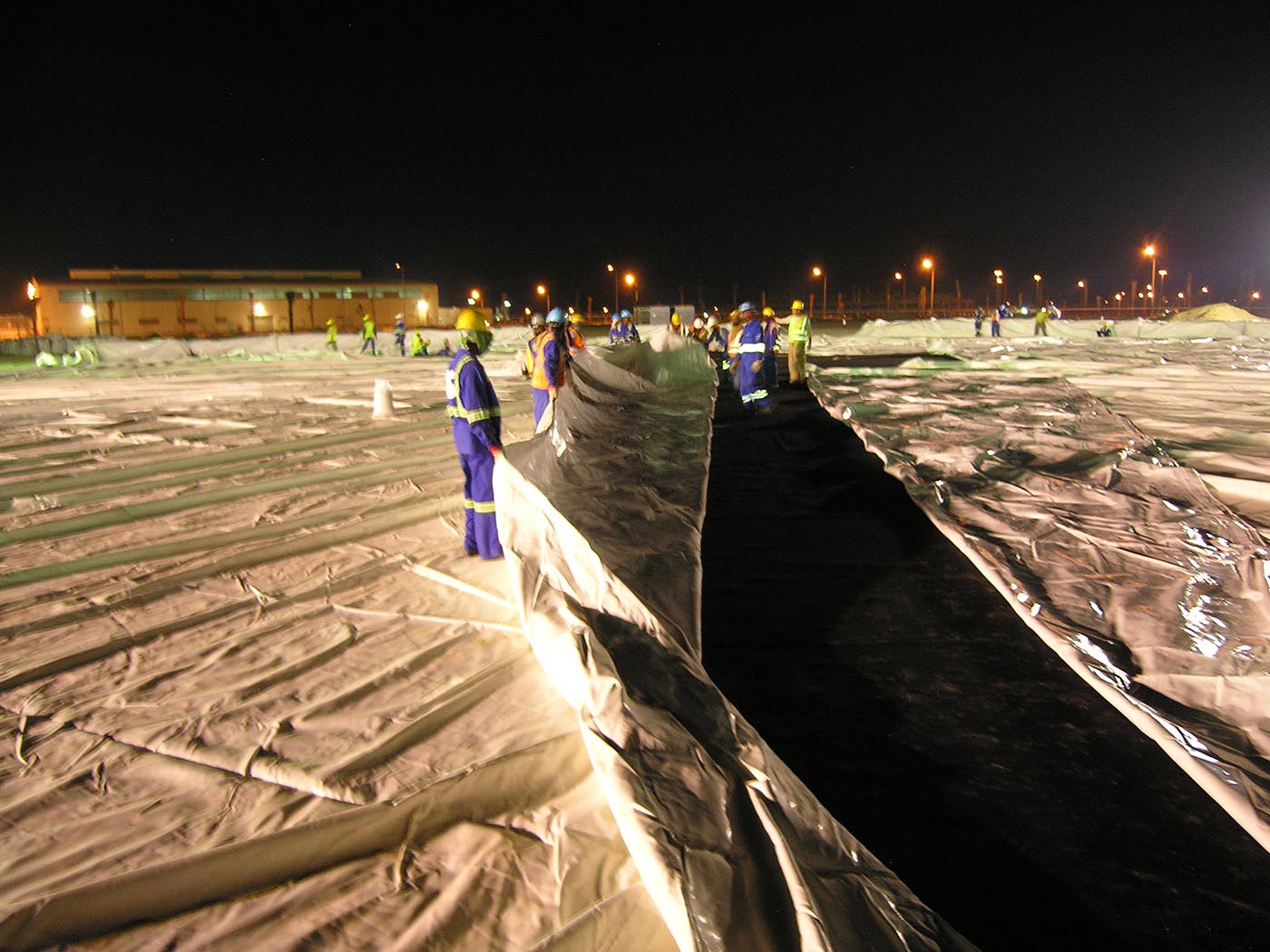
When an Absolute Hollywood dome arrives on site, the installation crew prepares the ground surface, lays a protective ground cover across the full dome footprint, deploys the dome fabric panels flat across the prepared area, and connects the air handling system before beginning pressurization. The dome inflates from ground level — no scaffolding, no cranes, no steel erection sequence. As internal air pressure builds, the fabric shell rises and takes its hemispherical or spherical form, achieving full geometry when internal pressure reaches its operating level.
The installation footprint during setup requires only the floor area of the dome itself plus a working perimeter for the crew. There are no crane swing zones, no temporary steel storage areas, and no extended assembly corridors. This makes inflatable dome installation viable in urban plazas, convention center halls, stadium concourses, outdoor festival fields, and remote locations that rigid dome structures cannot access.
Once the dome is pressurized and geometry is confirmed, the installation crew seals entry points, installs airlock tunnel entry systems where required, and prepares the interior for the next phase — projection system installation. Dome installation and projection installation are separate sequential phases, each with its own timeline depending on the dome size and show complexity.
How Long Does It Take to Set Up a Projection Dome?
Structural dome installation — the dome inflated, pressurized, and ready for interior load-in — takes between one day and four days depending on dome diameter. Projection system installation, warp mapping, calibration, and technical rehearsal are scheduled separately and add additional time based on projector count and show complexity.
Reference timelines for structural dome installation:
- StratoSphere — 60 feet (19 meters): 1 day structural installation. Projection installation achievable same day or following day depending on show complexity.
- Inflatable Projection Dome — 65 to 160+ feet (20 to 49+ meters): 1 to 3 days structural installation depending on diameter. Projection installation scheduled separately.
- Celestial Dome — 235 feet (72 meters): 3 to 4 days structural installation. Projection installation, calibration, and technical rehearsal scheduled separately and add additional days.
Turnkey service — which includes interior build-out, staging, audio, lighting, content delivery, and on-site crew management throughout the event — adds further time beyond structural and projection installation. Every Absolute Hollywood deployment is planned with a detailed site-specific schedule that accounts for all phases from freight arrival through to event-ready status.
To put these timelines in context: a geodesic dome at 60 feet takes four or more days to install — the same size Absolute Hollywood dome completes structural installation in one day. At 160 feet, a geodesic dome requires multiple weeks of on-site assembly with cranes, heavy freight staging, and a large specialized crew. An Absolute Hollywood dome of equivalent diameter installs in three days from ground level without heavy lift equipment.
What Does the Interior of a Projection Dome Look Like During Inflation?
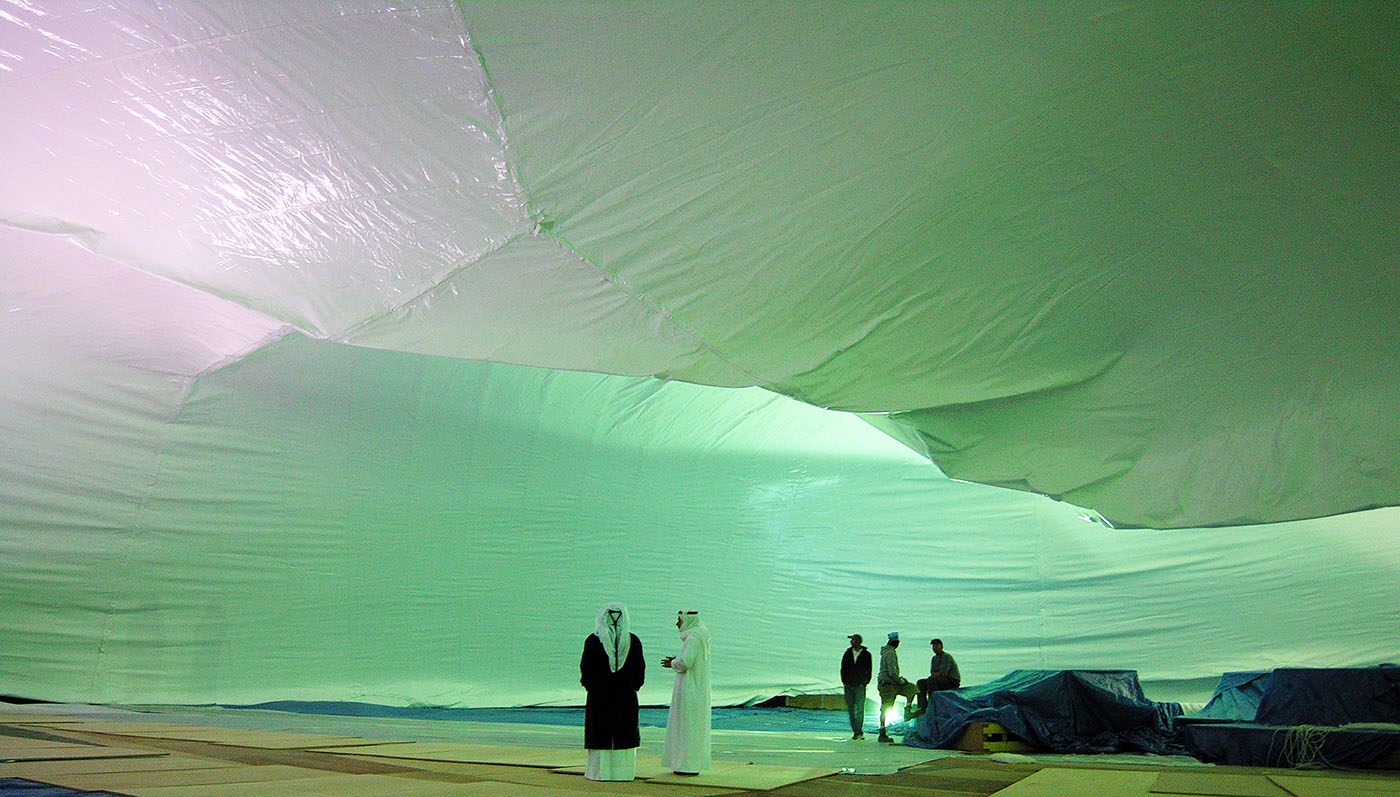
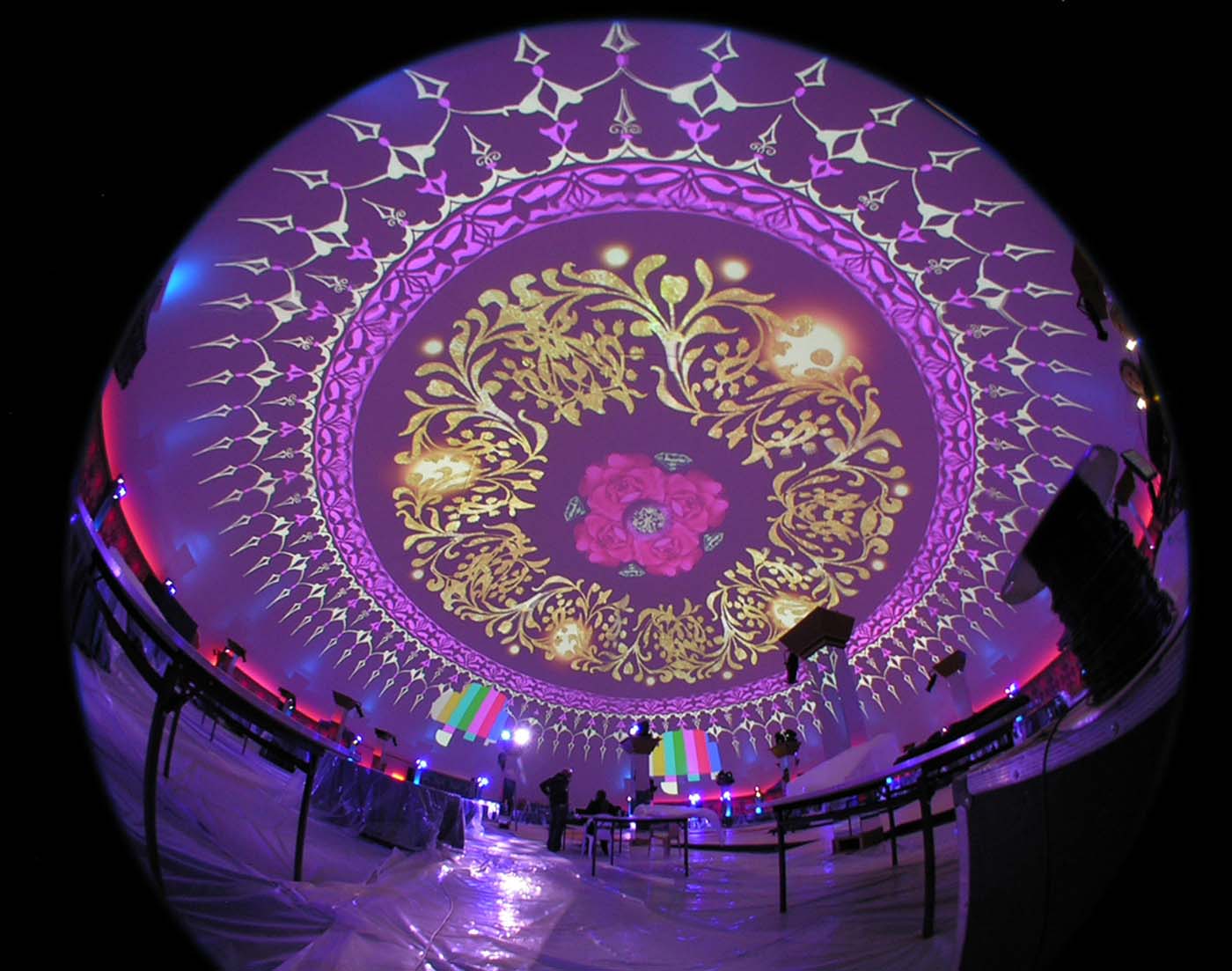
From inside the dome, the inflation sequence is unlike anything in conventional construction. The fabric ceiling rises from the floor as internal air pressure builds — the crew and equipment at floor level are gradually surrounded by the emerging hemispherical geometry above them. At the Celestial Dome’s 235-foot (72-meter) diameter, the interior volume that fills during inflation encloses 43,373 square feet (4,030 m²) of floor space. The entire sequence occurs from ground level with no scaffolding, no overhead rigging, and no mechanical lift equipment of any kind.
This interior inflation view is unique to the inflatable dome format. A geodesic dome of comparable size cannot be experienced from the inside during construction — its steel structure is assembled panel by panel from the outside using cranes. The inflatable dome builds its geometry around the crew as the air pressure rises, confirming structural integrity at every stage of the inflation sequence before the dome reaches full operating pressure.
How Many People Does It Take to Set Up a Projection Dome?
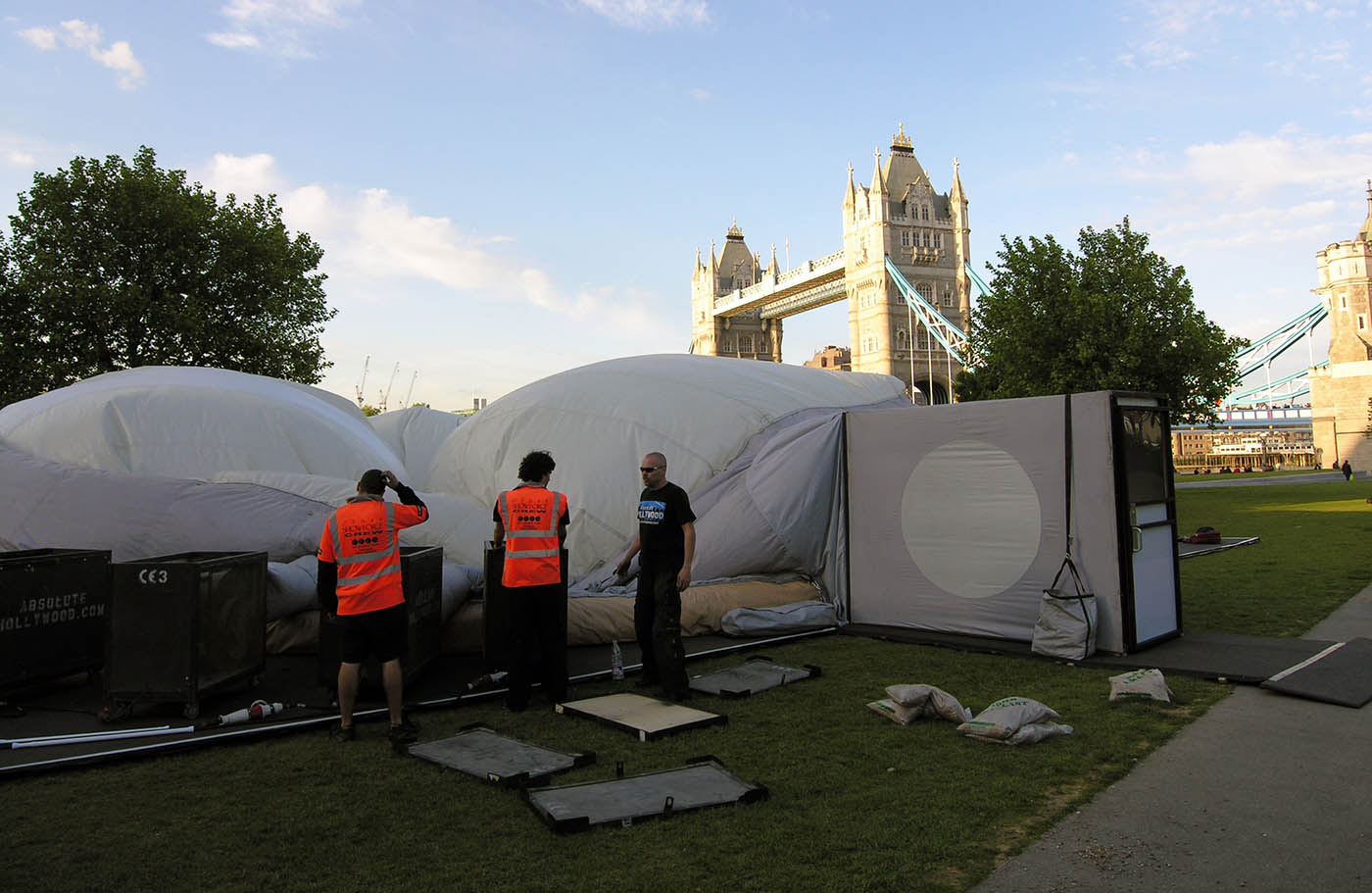
Dome installation crew size scales with dome diameter. A 60-foot (19-meter) StratoSphere installation is managed by a small specialist crew. A 235-foot (72-meter) Celestial Dome installation requires a larger team coordinating dome fabric layout, air handling, entry system installation, and perimeter anchoring. All dome and video supervisors are Absolute Hollywood specialists who lead local general labor crews through each phase of the installation — eliminating the cost and logistics of flying in a large technical team while maintaining the precision and quality standards that 26 years of global deployments demand. Warp mapping and projection calibration are handled by dedicated Absolute Hollywood technical crew, separate from the structural installation team.
Because inflatable dome installation does not require crane operators, steel riggers, or heavy equipment operators, the total crew requirement is significantly lower than a geodesic dome of equivalent size — where crane operators, steel assembly specialists, and structural engineers are required on site throughout the installation period.
Does a Projection Dome Need a Crane?
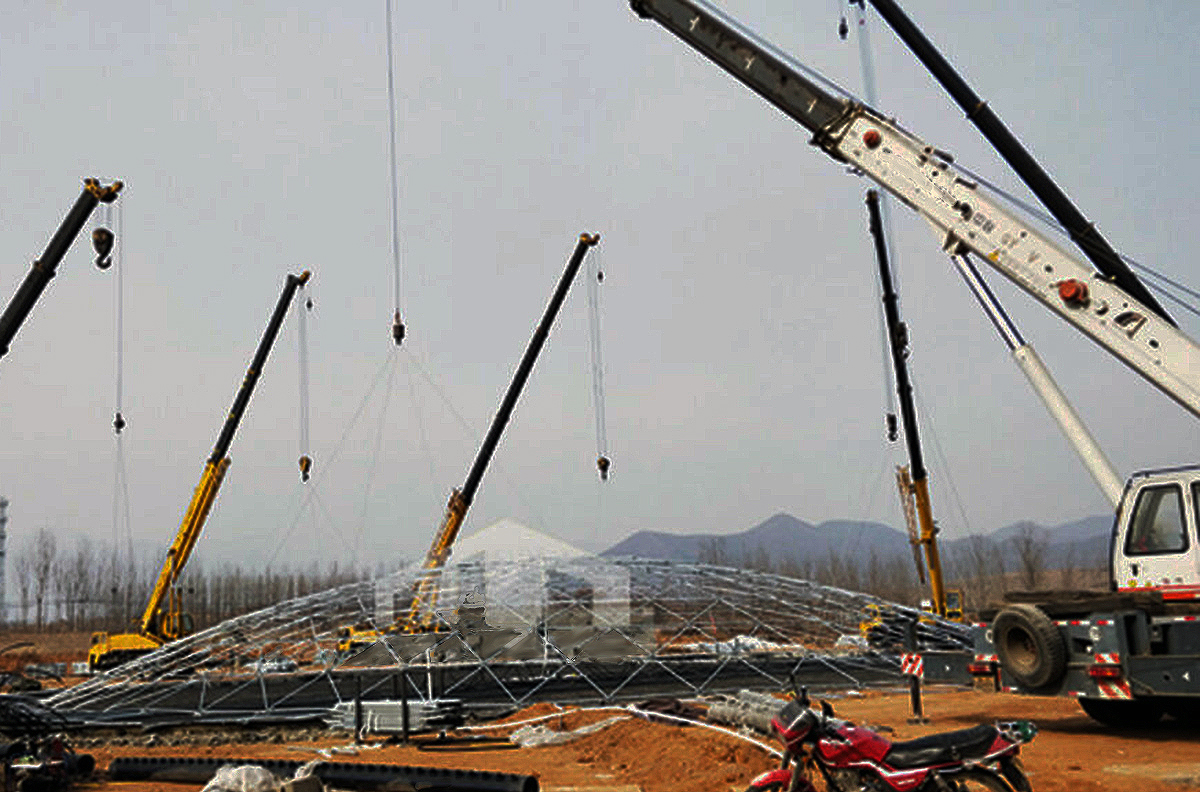
No. An Absolute Hollywood inflatable projection dome does not require a crane at any point during installation or strike. The dome inflates from ground level using an air handling system. All connection points, entry systems, and perimeter anchoring are managed from the ground by the installation crew. This is one of the most significant practical advantages of inflatable dome technology over rigid geodesic construction — as the image above illustrates, a geodesic dome of large diameter requires multiple heavy cranes operating simultaneously just to lift the steel frame into position. Crane access is a major logistical constraint at urban venues, convention centers, stadiums, and international sites where crane permits, swing clearances, and structural load limits make crane-dependent installation impractical or impossible.
The Marvel Experience touring activation in 2014 and 2015, which deployed seven interconnected Absolute Hollywood domes across worldwide venues, required no crane at any deployment site. The same is true of the Vancouver 2010 Winter Olympics installation, the COP15 Copenhagen deployment, and every other Absolute Hollywood event on record.
Can a Projection Dome Be Set Up Outdoors?
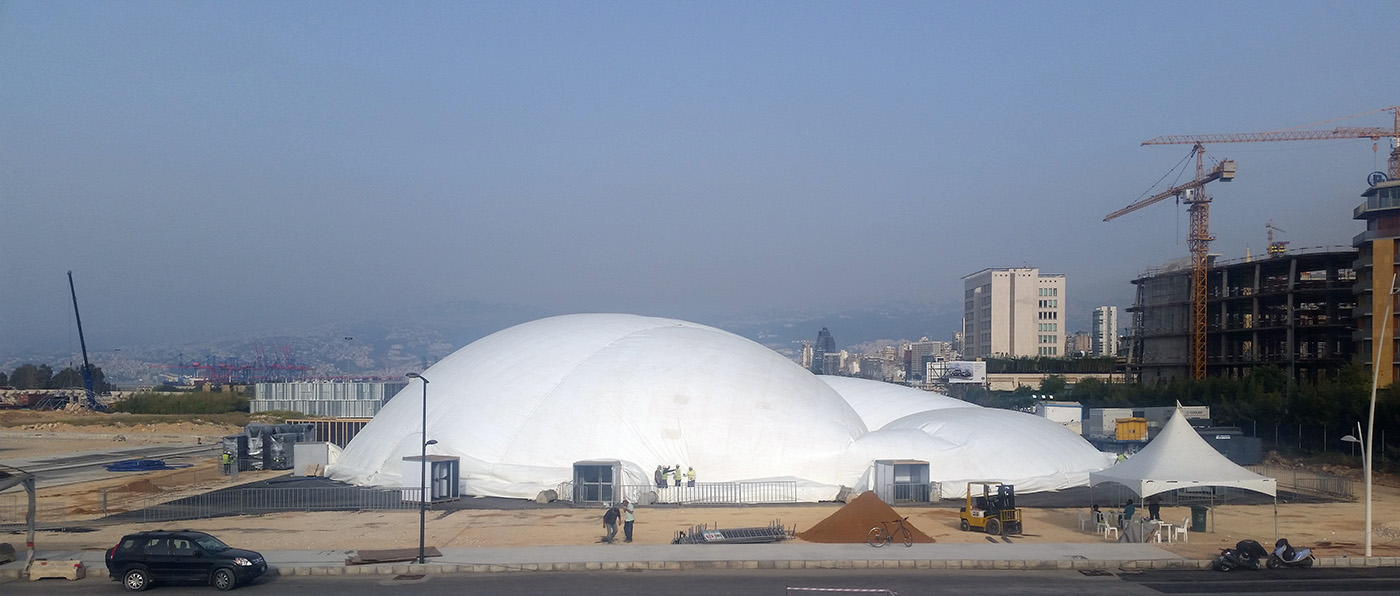
Yes. Absolute Hollywood domes are designed for outdoor deployment as standard, not as an exception. The inflatable structure maintains its geometry under external load because internal air pressure holds the shell constant regardless of wind, temperature variation, or surface conditions. All Absolute Hollywood installations are engineered and set up to meet the local temporary building code wind requirements for the installation location — coastal and high-exposure sites carry higher wind codes, and Absolute Hollywood adjusts setup configuration accordingly. Wind codes for Absolute Hollywood deployments have typically fallen in the 90 to 120 MPH range, though Absolute Hollywood meets whatever the applicable code requires.
By contrast, many other inflatable dome companies operate at wind ratings of 35 MPH — below the threshold accepted for most corporate outdoor installations and likely to cause event cancellations in typical outdoor conditions. This wind rating gap is a direct consequence of engineering difference, not just specification difference.
Absolute Hollywood domes have operated in temperatures ranging from −40°F to 140°F (−40°C to 60°C) and have been proven through an 83-knot desert sandstorm. Outdoor festival deployments, government ceremony sites, sports activation footprints, and open-air concert venues are all standard operating environments for the Absolute Hollywood fleet.
How Are Projection Domes Used at Concerts and Live Events?
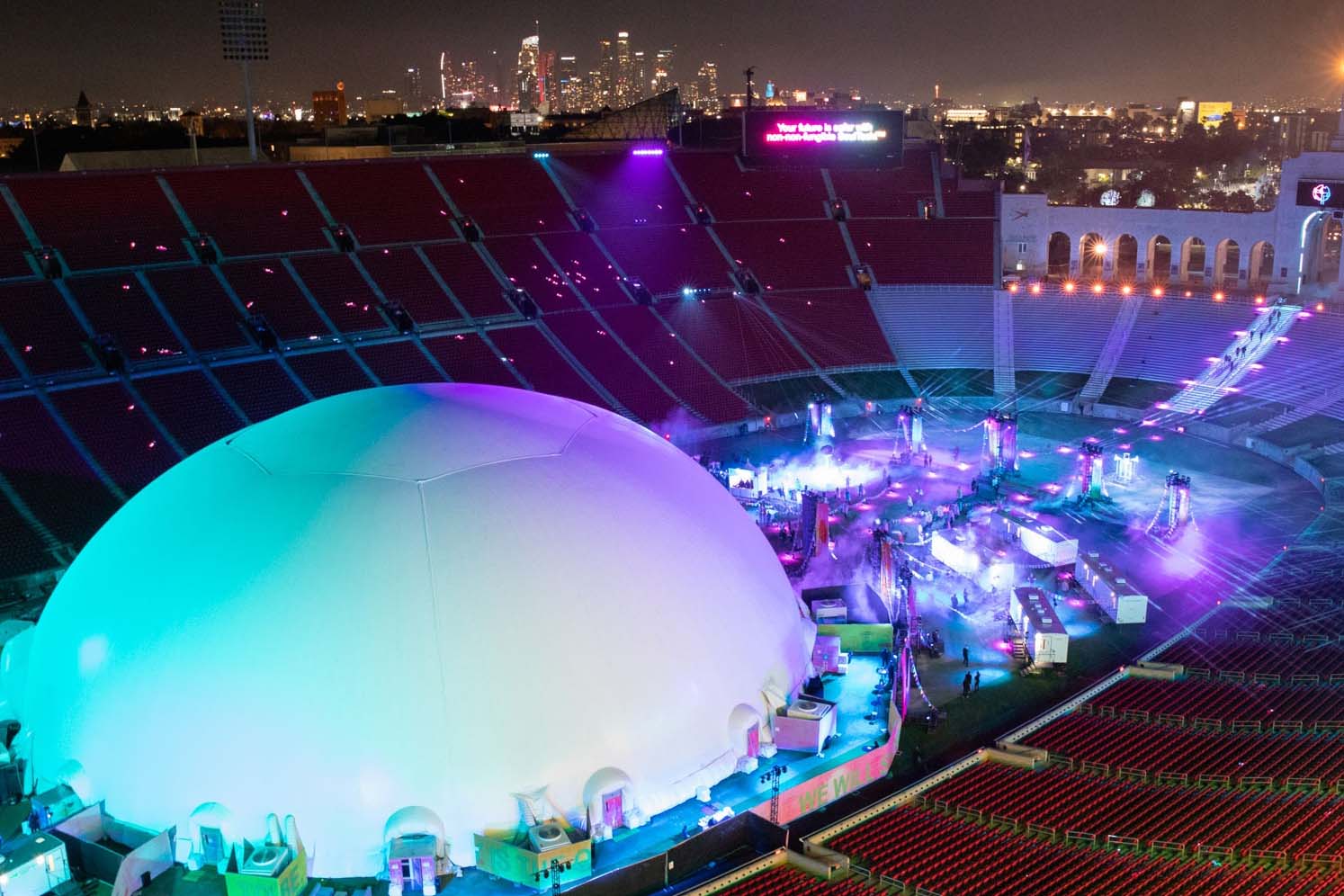
A projection dome at a concert or live event functions as both the performance venue and the performance itself. The dome interior becomes a 360-degree visual environment — the audience is inside the image, not looking at a screen. Live content, pre-rendered fulldome shows, and real-time visual feeds from the Sirius Full Dome 360-Degree Media Server wrap every surface simultaneously, creating an immersive environment that no flat screen or conventional stage setup can replicate.
Absolute Hollywood has deployed projection domes for live entertainment at Super Bowl LIV in Miami, the Vancouver 2010 Winter Olympics — including the Four Host First Nations cultural show — NASCAR activations, and NCAA Final Four fan events. Concert-specific deployments have included productions for Skrillex and Childish Gambino. The Beirut Cultural Festivals in May 2016 placed the Celestial Dome on the Beirut waterfront, where it housed “The Story of Beirut” — a 70-minute 360-degree immersive show performed by 75 musicians of the Lebanon Philharmonic Orchestra, attended by thousands and covered by CNN. The exterior of the dome simultaneously projects different content to the surrounding crowd, making the dome visible as a landmark from over a mile (2 kilometers) away while delivering an exclusive immersive experience inside.
For touring productions, the dome ships as a complete system — structure, projection, media server, content, and crew — and reinstalls at each venue in the tour schedule. The Marvel Experience (2014–2015) ran seven interconnected Absolute Hollywood domes through a worldwide touring activation, demonstrating that multi-dome touring at scale is operationally achievable with this system.
What Is the Difference Between Inflatable Dome Setup and Geodesic Dome Setup?
The difference is not incremental — it is architectural. A geodesic dome is built from interlocking steel or aluminum struts and hubs assembled on site. Every strut must be connected, every hub tightened, every panel attached. At 60 feet, this takes four or more days. At 160 feet, it takes multiple weeks. The structure requires cranes for large sections, specialized steel assembly crews, and a staging area for the raw components. When the event ends, the entire process reverses — strike time mirrors installation time.
An inflatable dome is unpacked, laid flat, pressurized, and operational. Installation does not require cranes, steel assembly, or structural engineering on site. Strike is measured in hours rather than days — the dome deflates, folds, and packs back into its shipping configuration. The same dome that took three days to install at 160 feet can be deflated, packed, and on a truck in a matter of hours after the event ends.
The geodesic dome format also reaches a practical size ceiling at approximately 160 feet (49 meters) for rental and touring applications. Above that diameter, the weight, crane requirements, and assembly complexity become prohibitive for temporary event deployment. The Absolute Hollywood Celestial Dome reaches 235 feet (72 meters) — 75 feet beyond the practical geodesic ceiling — and installs in four days without a crane.
What Are the Power Requirements for a Projection Dome?
Power requirements for a projection dome deployment cover three systems: the air handling system that maintains dome pressurization, the projection system, and the audio and lighting systems for the event. Power specifications vary by dome size and show configuration and are provided as part of the production planning package for every Absolute Hollywood deployment.
Most convention centers, event venues, stadiums, and outdoor festival sites with generator infrastructure can accommodate Absolute Hollywood dome power requirements. For locations without adequate power infrastructure, Absolute Hollywood coordinates generator specifications as part of the site survey and pre-production planning process. Power requirements are never a barrier to deployment — they are a planning parameter that is solved during pre-production.
Frequently Asked Questions
Can a projection dome be set up inside a convention center or arena?
Yes. Absolute Hollywood domes have been installed inside convention centers, arenas, stadiums, and purpose-built event halls globally. The inflatable structure requires only the floor footprint of the dome plus a working perimeter — no crane access, no overhead rigging points, and no structural loading of the building beyond the ground load of the dome base. The dome’s ceiling height requirement is its inflated height plus a working clearance margin, which is confirmed during the pre-production site survey.
How long does it take to strike and pack down a projection dome?
Strike time is significantly faster than installation. A 60-foot (19-meter) StratoSphere deflates, packs, and loads out in a matter of hours. Larger domes have proportionally longer strike times but in all cases strike is faster than installation because pressurization and geometry verification are not required. The Absolute Hollywood crew manages all strike phases — dome deflation, fabric packing, projection system derig, and freight loading — as part of the full-service deployment.
Can a projection dome be moved mid-tour to multiple cities?
Yes. Absolute Hollywood domes are engineered for touring deployment. The dome packs into its shipping configuration after each event and ships to the next venue by land, sea, or air. The Marvel Experience (2014–2015) toured seven interconnected Absolute Hollywood domes through worldwide venues across multiple continents. Each dome reinstalled at each new venue using the same installation process, with site-specific warp mapping and calibration completed fresh at each location.
What floor surface does a projection dome require?
Absolute Hollywood domes can be installed on most prepared surfaces — concrete, asphalt, compacted ground, grass, artificial turf, and event flooring. The base of the dome is anchored to the surface using ballast, ground anchors, or perimeter rigging depending on the surface type, wind code requirements, and venue permissions. Surface requirements are confirmed during the pre-production site survey and site plan.
How far in advance does a projection dome deployment need to be planned?
Absolute Hollywood has been executing global dome deployments for 26 years — and that experience means we can move fast when your timeline demands it. If an opportunity comes up quickly, contact us immediately. We understand that events and needs arise on short notice, and we are here to make your vision happen on your schedule. Our team has the logistics infrastructure, the freight relationships, the content production pipeline, and the on-site experience to mobilize quickly for clients who need us to. For large-scale international deployments with complex site requirements, early engagement — ideally three to six months out — gives us the most flexibility on dome size, content production, freight routing, and crew scheduling. But if your event is sooner than that, call us anyway. Twenty-six years of experience exists precisely for moments like that.
Can a projection dome be set up on uneven or sloped ground?
Absolute Hollywood conducts a detailed site survey for every deployment. Moderate ground variation can be accommodated through leveling and base preparation. Significant slopes or uneven terrain are assessed on a site-specific basis. The pre-production site survey identifies any site preparation requirements well in advance of the installation date so that no surprises arise during the setup window. Contact the Absolute Hollywood team with your site details and we will assess feasibility directly.
Ready to Plan Your Projection Dome Deployment?
Absolute Hollywood has transported and installed projection domes across 33 countries — from 60-foot (19-meter) single-day installations to 235-foot (72-meter) multi-day deployments at government ceremonies, Olympic Games, Super Bowls, world tours, and Fortune 500 product launches. The same system that deployed at the Sands Expo and Convention Center in Las Vegas in 2000 — 23 years before MSG Sphere opened — is available for your event today.
Explore the full dome fleet, review the Celestial Dome and StratoSphere specifications, learn about our 360 video production capabilities, or contact the team to discuss your project.
Comments are closed.